
Trump’s Spain embargo exposes the cracks in NATO unity
While the Ankara summit produced a show of military spending and Ukraine support, Trump's trade embargo on Spain signals a move toward transactional diplomacy that threatens long-term alliance cohesion.
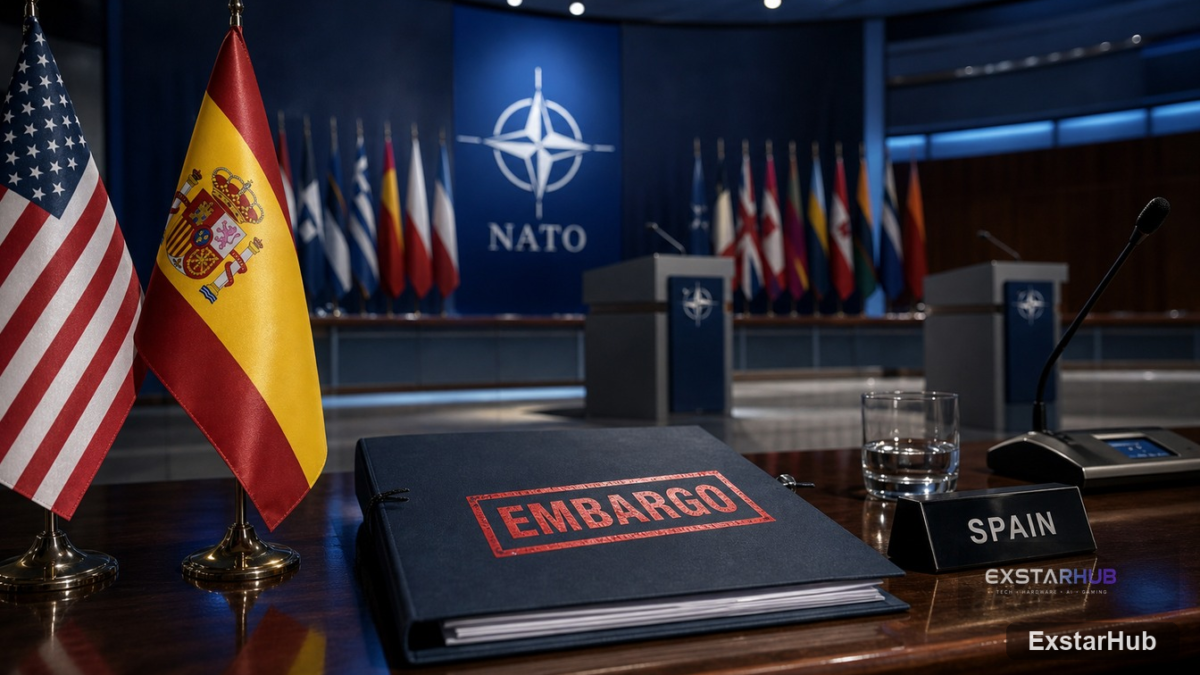
The core tension within NATO today isn’t just about external threats; it is about whether the alliance can survive the shift toward purely transactional diplomacy. While the recent Ankara summit concluded with renewed pledges for Ukraine and increased defense spending, Donald Trump’s decision to target Spain with a trade embargo signals that personal grievances and economic leverage are beginning to outweigh traditional collective security norms.
The illusion of ‘incredible’ unity
On paper, the results of the two-day summit in Turkiye appear to be a victory for the status quo. NATO leaders reaffirmed their “ironclad commitment” to Article 5—the mutual assistance clause that has served as the West’s primary security bedrock for over 75 years. The alliance also pledged 70 billion euros ($80bn) in assistance to Ukraine, a move designed to project a united front against Russian advancement.
However, the reality behind the scenes is far more fractured. While Trump publicly described the atmosphere as “amazing” and full of “love,” his actions tell a different story. By questioning whether the US would actually defend allies during past conflicts—specifically citing the war on Iran—Trump has introduced a layer of uncertainty that none of the 32 member states truly want to navigate.
Economic leverage as a defense tool
The most striking development from the summit isn’t a military move, but a commercial one. Trump’s order for Treasury Secretary Scott Bessent to “cut off all trade… including visits” with Spain represents a pivot toward using economic warfare to punish allies who do not meet specific spending demands. This puts Spain and Denmark in a peculiar crosshair, where historical ties are being traded for budget metrics.
This aggressive posture is mirrored by the administration’s pressure on Europe to take primary responsibility for continental defense. Despite European leaders showcasing “more than $50 billion in new procurements,” current data shows a stark reality: only five of 32 NATO members are actually on track to meet the 3.5 percent GDP defense spending goal by 2026. The message from Washington is clear: if you don’t pay your share, the benefits of the alliance may be revoked.
Pivots and concessions in Ankara
While Spain faces an embargo, Turkiye appears to be receiving a different treatment. In a notable shift, Trump signaled he would lift sanctions on Turkiye and is currently weighing the resumption of F-35 jet sales. This move comes despite significant pressure from Israeli Prime Minister Benjamin Netanyahu, highlighting a pragmatic—if inconsistent—approach to regional power players.
Furthermore, while the US remains at odds with some members over Greenland and Iran, it continues to facilitate specific hardware deals, such as approving the sale of Tomahawk cruise missiles to Germany. These individual transactions show an alliance operating more like a series of bilateral larder-shops than a unified bloc.
Why it matters
This shift toward “transactionalism” fundamentally changes what NATO is. When security becomes a commodity that can be traded for defense spending or swapped for trade favors, the reliability of Article 5 becomes subjective. For smaller allies like Spain, being targeted by an embargo over defense budgets creates a precarious environment where they may feel forced to choose between their economic interests and their collective security obligations. This internal friction could delay coordinated responses to future crises, as members must first navigate the political fallout of US-led trade restrictions and demands.
Key takeaways
- Trump’s trade embargo on Spain signals a shift toward using economic penalties to enforce defense spending targets.
- While 70 billion euros was pledged for Ukraine, only five out of 32 members are projected to meet the 3.5% GDP spending goal by 2026.
- The US is signaling a pivot on Turkiye by considering the lifting of sanctions and resumption of F-35 sales.
- Individual military partnerships, like the UK and Dutch maritime agreement, continue despite broader tensions within the alliance.
FAQ
Why did Trump target Spain specifically?
The primary tension stems from concerns over Spanish defense spending. The administration is pushing for Europeans to take more responsibility for their own security costs.
Will NATO actually defend allies under Article 5 now?
While the summit reaffirmed this commitment, Trump has publicly questioned its worth in previous conflicts, creating a sense of uncertainty regarding US involvement compared to past decades.
The verdict
NATO is currently performing a delicate balancing act. It can still produce large-scale funding for Ukraine and sign major maritime contracts, but the increasing use of trade embargoes as a tool of diplomacy suggests that the “ironclad” unity of the past is being replaced by a much more volatile, deal-based architecture.
Source: Al Jazeera
Related: Iran Says Strait of Hormuz is Closed as Geopolitical Risks Spike