
Meta AI Data Center Cost Expansion: A Blueprint for Hyper-Scale Friction
The massive jump in Meta's project costs from $10 billion to $50 billion highlights the escalating capital intensity of AI infrastructure and its polarizing local impacts.
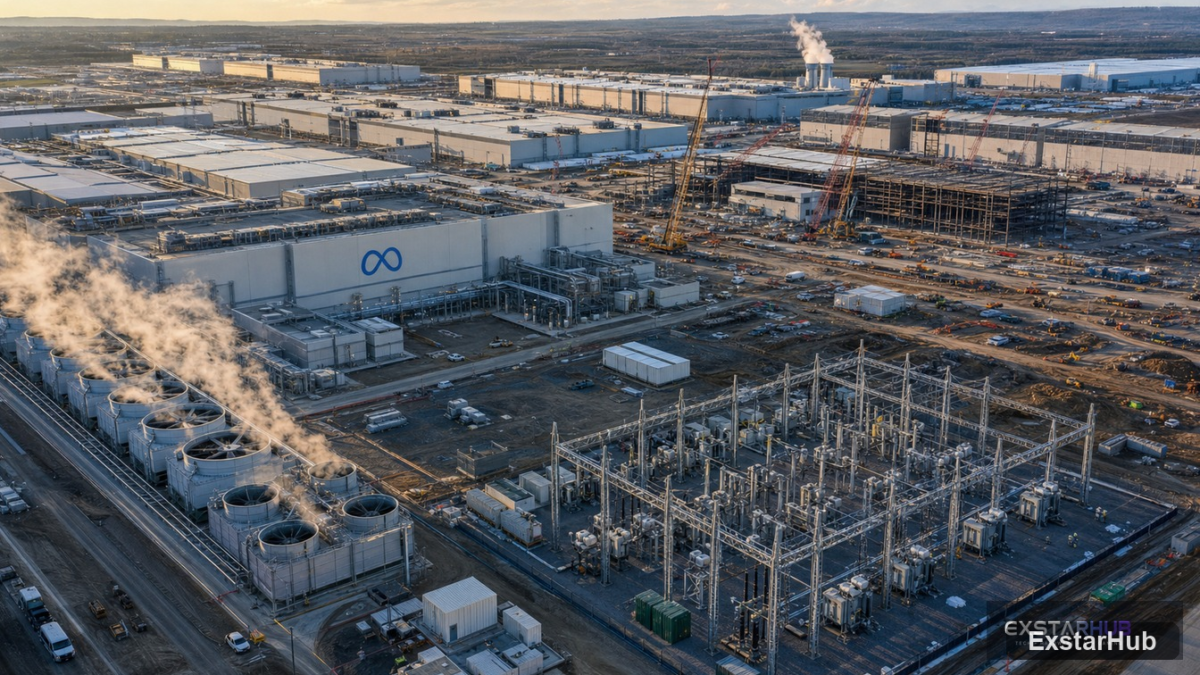
The sheer scale of the global compute race has moved past theoretical projections into a realm of massive, unchecked capital expenditure. Meta’s expansion of its Hyperion supercluster in Richland Parish—now projected to cost upwards of $50 billion—serves as a stark case study in how quickly AI infrastructure demands are outstripping initial estimates. In less than two years, the project’s price tag quintupled from an original $10 billion estimate, revealing that building the backbone for large language models is becoming one of the most capital-intensive industrial undertakings in modern history.
The skyrocketing economics of AI infrastructure
When construction began in 2024, a $10 billion investment was considered significant. However, Meta’s shift to a $50 billion budget highlights a fundamental shift in the feasibility and requirements of high-density compute. To achieve the necessary power for training tools like ChatGPT, the facility is scaling to a massive 5-gigawatt capacity, far exceeding the initial 2-gigwatt projections.
This rapid escalation isn’t just a matter of hardware costs; it reflects a structural shift in how these projects are funded. The expansion relies on deep-pocketed private capital and aggressive state incentives. In late 2024, Louisiana enacted a law making data centers built before 2029 sales-tax-exempt for 20 years—a move designed to ensure Meta doesn’t look elsewhere for its massive compute footprint.
Local champions vs. displaced residents
The project has created an economic binary in rural Louisiana, where some see a lifeline and others see a crisis of displacement. For businesses like Mayo Tours, the influx of construction workers has been a boon; the owner reports moving from 40 coaches to 102, with drivers earning over $80,000 a year—nearly double the regional median income of $42,000.
Conversely, for residents in one of Louisiana’s poorest parishes, the “Hyperion effect” feels more like an eviction notice. Families living in nearby mobile home parks report being forced to consider moving because local rents have tripled due to the construction boom. This creates a friction point where the macroeconomic gains are starkly visible, but the microeconomic costs are being borne by the most vulnerable locals who were sidelined during the initial deal-making.
The hidden cost of power and public incentives
While Meta is exempt from state and local sales tax on internal equipment like servers and chillers, it still pays a 1% local sales tax. This small percentage has been funneled into high-profile school employee bonuses topping $50,000—a figure that stands out sharply against an average teacher salary of $56,785 in the state. However, these are largely temporary rewards tied to the construction phase.
Perhaps more concerning is the long-term grid impact. To support 5 gigawatts, Entergy is constructing 10 new plants and 240 miles of transmission lines funded by Meta. While Meta has signed a “Ratepayer Protection Pledge” and agreed to fund up to 2.5 gigawatts of renewable energy, consumer groups like Earthjustice are already investigating whether these financing arrangements with venture debt firms could still lead to higher costs for regular Louisiana ratepayers.
Why it matters
The Meta AI data center cost expansion is a preview of the future of industrial-scale technology. We are moving away from a period where “tech” was about software and into an era of brutal, physical resource competition. The fact that costs quintupled in 24 months suggests that current estimates for AI infrastructure might be consistently underpowered, potentially leading to more volatile land-use conflicts and sudden shocks to local economies.
Furthermore, the “if you don’t have this, we won’t come” ultimatum revealed by state officials shows how much leverage tech giants now hold over rural geography. When a project is so large it requires 10 new power plants, it ceases to be a local development and becomes a national infrastructure priority that can override local community needs.
Key takeaways
- Meta’s Hyperion supercluster costs jumped from $10 billion to over $50 billion in under two years.
- The project is scaling to 5 gigawatts of capacity, significantly higher than the original 2-gigwatt plan.
- Local residents face tripled rents and potential displacement despite significant job creation for some sectors.
- Louisiana’s sales-tax exemptions and infrastructure concessions highlight the aggressive incentives required to land these projects.
- Consumer groups remain concerned about long-term electricity rate hikes for non-Meta users on the state grid.
FAQ
How much did Meta’s project cost increase?
The project cost rose from an initial $10 billion estimate to over $50 billion in less than two years, primarily driven by a shift to 5-gigawatt capacity.
What incentives did Louisiana provide for the data center?
Louisiana granted a 20-year sales-tax exemption for data centers built before 2029 and funneled a 1% local tax on purchases into teacher bonuses during construction.
Who is funding the new power infrastructure?
Meta is paying for the construction of 10 new plants and 240 miles of transmission lines, along with up to 2.5 gigawatts of renewable energy.
The Meta AI data center cost expansion signals that the AI revolution will be won by whoever can afford to build at scale, even if it means rewriting the social and economic fabric of rural communities in the process.
Source: Fortune