
The End of Cooperation: Apple sues OpenAI for trade secret theft
Apple is pivoting from a strategic partnership with OpenAI to an aggressive legal battle over stolen trade secrets, signaling the end of 'coopetition' in AI.
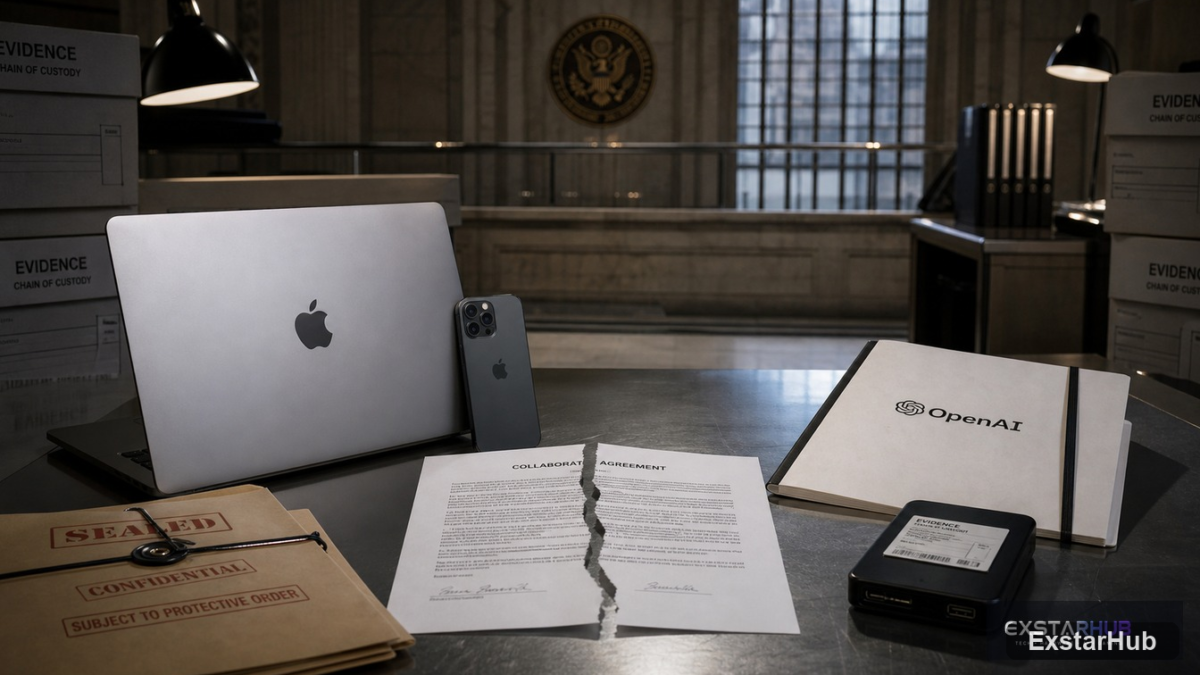
The era of friendly collaboration between Silicon Valley’s biggest players and AI pioneers is officially over. Apple sues OpenAI for trade secret theft, marking a pivot from mutual exploration to aggressive litigation as both companies fight to secure their respective pieces of the generative AI pie.
A Shift From Partnership to Prosecution
For much of the last year, the relationship between Apple and OpenAI appeared to be one of strategic cooperation. They worked together on integrating ChatGPT into iOS and macOS, aiming to give iPhone users a conversational edge without building every model from scratch. However, this new lawsuit suggests that behind-the-scenes friction regarding intellectual property (IP) reached a breaking point.
By alleging trade secret theft, Apple isn’t just complaining about data scraping—a common grievance in the AI space. They are specifically targeting proprietary internal methods or technical secrets that they believe OpenAI misappropriated during their period of interaction. This move puts OpenAI on the defensive, forcing them to account for how much “shared” knowledge actually crossed the line into unauthorized usage.
This legal maneuver suggests a breakdown in trust. When two tech titans share environments—whether through API access, research data exchange, or joint product development—the boundaries of what constitutes ‘open’ information versus protected secrets can become blurred. Apple is now asserting that these boundaries were not just crossed, but actively violated.
The High Stakes of Intellectual Property in AI
In the current tech landscape, trade secrets are often more valuable than patents because they can be harder to reverse-engineer. If Apple successfully proves that OpenAI utilized specific, non-public proprietary data or architectural designs, it could fundamentally alter how companies approach cross-platform integrations.
The risk profile for AI development is unique. Unlike software features, which are visible and easily analyzed, trade secrets in this context likely involve the training methodologies, weights, or specific optimization techniques that give a model its competitive edge. If OpenAI is found to have absorbed Apple’s internal innovations, it undermines the entire business model of ‘collaborative’ AI development.
Why it matters
This lawsuit is a canary in the coal mine for the future of tech partnerships. It tells us that the “coopetition” phase—where companies share enough to build a product but not so much as to lose their edge—is becoming increasingly difficult to maintain. For developers and smaller firms, this sets a precedent: interacting with a major AI player might come with significant risks regarding IP leakage.
Furthermore, it forces OpenAI to be more selective about its data ingestion and partnership boundaries. If they can’t trust the giants they work with, they may have to lean harder into closed-loop systems, potentially slowing down the pace of integration for consumer devices like the iPhone or Mac. We are seeing a retreat from openness toward fortified silos as companies realize that information is the ultimate currency in the generative AI race.
Key takeaways
- Apple is moving from a collaborative stance to an adversarial one regarding its intellectual property.
- The lawsuit specifically targets trade secret theft rather than general public data scraping issues, indicating a deeper breach of trust.
- This could set a legal precedent for how tech giants handle IP sharing during AI integration phases.
- OpenAI faces significant pressure to prove that their model development didn’t rely on misappropriated proprietary secrets shared during partnerships.
FAQ
What specifically is Apple accusing OpenAI of?
While the full extent of the trade secret theft may be detailed in court filings, the core accusation centers on the unauthorized use of confidential information shared during their professional interactions and joint development efforts.
How does this affect current ChatGPT features on Apple devices?
The lawsuit targets IP rights and does not necessarily mean that current services will be pulled immediately. However, it could lead to significant changes in how these technologies are licensed or integrated moving forward as the legal framework is established.
Apple sues OpenAI for trade secret theft because the cost of sharing secrets has finally outweighed the benefits of the partnership. This isn’t just a legal headache; it’s a clear signal that in the AI race, protecting your unique technical advantages is now as important as building them.
Source: Axios