
Trump’s New Maritime Order: Policing the Strait of Hormuz via a 20% Toll
President Trump is pivoting to a unilateral enforcement model for the Strait of Hormuz, proposing a 20% security toll on cargo and reinstating a naval blockade.
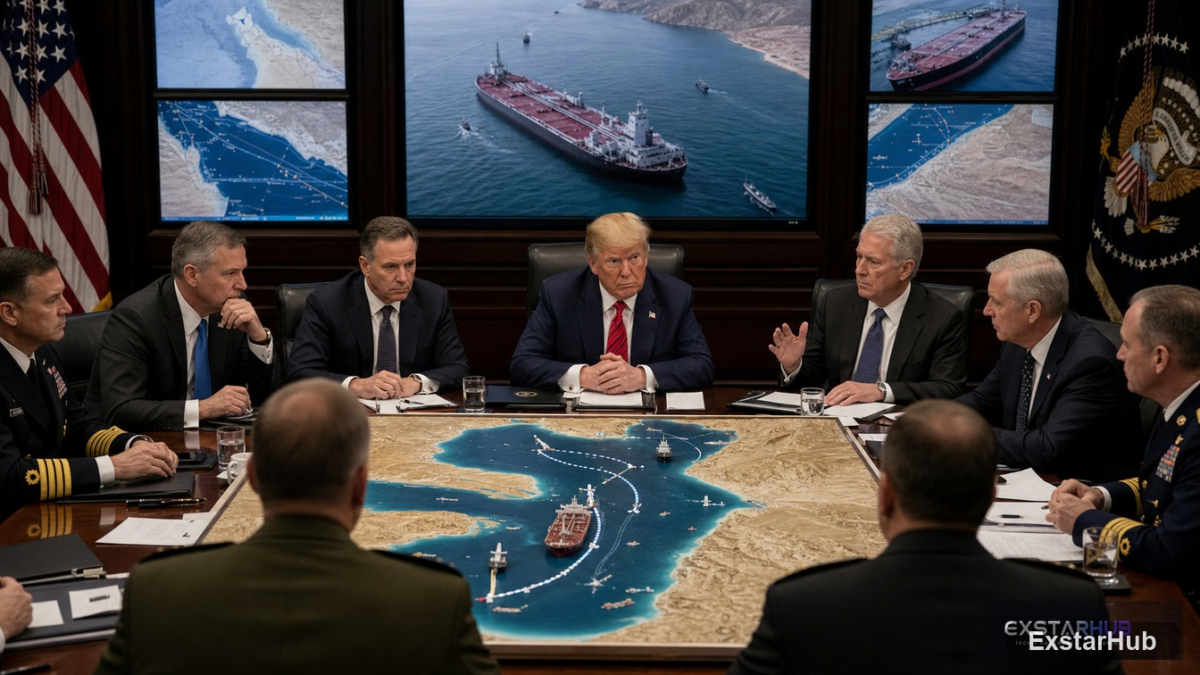
The geopolitical dynamics surrounding global energy transit have hit a volatile inflection point as President Trump signaled a move to assert unilateral U.S. control over the Strait of Hormuz. By proposing a 20% security toll on cargo vessels and reinstating a formal naval blockade of Iranian ports, the administration is pivoting from failed diplomatic moratoriums toward a high-friction economic enforcement model that treats maritime security as a billable commodity.
The Death of the Fragile Truce
This shift marks a definitive end to the brief period of stability suggested by the mid-June memorandum of understanding between the U.S. and Iran. While those initial talks aimed at creating a managed waterway, Trump has declared that agreement “over.” The move replaces a cooperative framework with a punitive one, where the U.S. intends to “keep” the strait open by force rather than through the bilateral coordination previously discussed by Iranian Foreign Minister Abbas Araghchi and Omani officials.
On the ground, maritime data already reflects this growing instability. Records from maritime tracker Kpler show that traffic has hit its lowest levels since June 13, with only 14 vessels crossing the strait on a recent Sunday—half of which were Iran-flagged. For non-Iranian ships, the environment is becoming increasingly perilous; many are navigating with transponders turned off to avoid detection or risk from sea mines in what the International Maritime Organization has labeled an unsafe corridor.
Naval Blockades and Sea Drone Warfare
The transition to a harder stance is being reinforced by active military degradation of Iranian infrastructure. U.S. Central Command (CENTCOM) recently confirmed strikes on a submarine and ship maintenance facility at the Bandar Abbas Naval Base in the country’s southwest coast. Notably, these operations utilized three Corsair unmanned surface vessels, marking the first time American forces have deployed sea drones in combat operations to degrade Iran’s ability to target commercial shipping.
While Trump’s rhetoric focuses on tolls and blockades, the military reality involves high-tech maritime interdiction. Analysts at Vanguard Tech indicate that while some U.S.-supported corridors remain functional, any vessel perceived as Iranian-affiliated or failing to coordinate with specific designated routes faces heightened scrutiny. This creates a bifurcated maritime environment where security is no longer guaranteed by international norms but by direct military intervention and real-time
Source: CBS News