PELADN’s HO5 AI 470: When Mini PCs Finally Embrace Local AI
PELADN is launching the HO5 AI 470 mini PC, packing AMD's Ryzen AI 9 HX 470 processor and Radeon 890M graphics into a compact form factor. It’s arriving in late June 2026 with a $1,299 starting price, signaling a shift towards more powerful and flexible small-form-factor desktops.
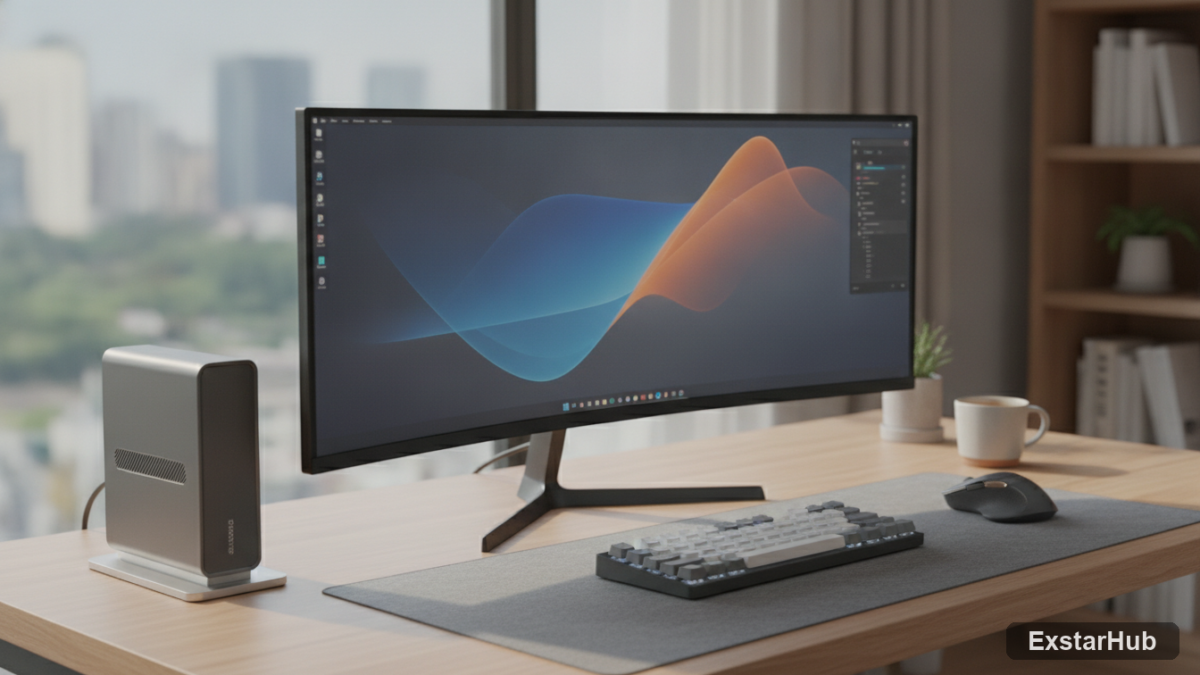
The rise of AI has been largely synonymous with cloud processing – but what if you could offload some of those tasks to your desktop? PELADN’s new HO5 AI 470 mini PC, launching globally in late June 2026 for $1,299, aims to deliver precisely that. It’s not just about shrinking a powerful machine; it represents an increasing demand for local AI processing capabilities, and the HO5 is positioned at the forefront of this trend.
Power Within a Pint-Sized Package
The core of the HO5 AI 470 is AMD’s Ryzen AI 9 HX 470 processor – a mobile chip boasting 12 cores, 24 threads, and boost frequencies up to 5.2GHz. Critically, this chip integrates AMD’s XDNA 2 neural processing unit (NPU), delivering up to 55 TOPS of dedicated AI performance, contributing to an impressive platform AI performance rating of up to 86 TOPS. This is paired with 32GB of DDR5 memory and a speedy 1TB PCIe SSD, ensuring that the system isn’t bottlenecked by storage or RAM even under heavy workloads.
External GPU Flexibility
While the integrated Radeon 890M graphics handles modern games at optimized settings and accelerates creative workflows, PELADN has smartly included OCuLink support. This allows users to connect an external graphics card enclosure, effectively transforming the mini PC into a more potent gaming or workstation machine without requiring a complete system overhaul. This contrasts with older USB-based eGPU solutions which often suffered from bandwidth limitations.
The Growing Trend of Local AI
The HO5 isn’t just about raw power; it’s about the increasingly important shift towards running more tasks locally. The Ryzen AI 9 HX 470’s NPU accelerates supported AI workloads, reducing reliance on cloud services and offering benefits to content creators (AI-assisted image/video editing), developers (local AI model testing), and business users (enhanced productivity features). Microsoft’s expanding Copilot+ experiences across Windows devices further highlight the need for hardware like this.
Gaming Performance & Expandability
The Radeon 890M GPU, while integrated, punches above its weight class. It’s often compared to entry-level discrete cards like NVIDIA’s GeForce GTX 1650 or AMD’s Radeon RX 6400 in terms of raw gaming performance. While it won’t replace a high-end dedicated card, it provides a solid foundation for esports titles and indie games, with the potential for significant graphical upgrades through OCuLink.
Why It Matters
The HO5 AI 470 exemplifies a larger trend: mini PCs are evolving beyond basic office machines. They’re now capable of handling demanding creative tasks, software development and even modern gaming – all within a remarkably small footprint. PELADN’s inclusion of dedicated AI hardware positions the HO5 at the leading edge of this evolution, catering to a growing demand for localized AI processing and demonstrating that powerful computing doesn’t have to come in bulky packages. The adoption of AMD’s Ryzen AI processors by multiple manufacturers also signals a broader industry commitment to on-device AI acceleration.
Key Takeaways
- Consider the HO5 AI 470 if you need a compact, powerful desktop with local AI capabilities.
- If gaming is a priority, factor in the cost of an external GPU enclosure to fully unlock its potential.
- The OCuLink connectivity provides significant upgrade flexibility beyond what’s typically available in mini PCs.
- Keep an eye on software support for Ryzen AI processors as more applications integrate local AI functionality.
FAQ
When will the PELADN HO5 AI 470 be available?
The system is scheduled to launch globally in late June 2026.
How much will the PELADN HO5 AI 470 cost?
It will have a starting price of $1,299.
The arrival of the PELADN HO5 AI 470 marks not just the launch of a new mini PC, but a significant step toward bringing powerful, localized AI processing to a wider audience. The future of desktop computing is getting smaller – and smarter.
Source: ThePCEnthusiast