Intel AMD Server CPU Deals Lock In China Supply
Intel and AMD are reportedly seeking longer server-CPU purchase commitments in China as AI demand tightens supply and pushes some prices sharply higher.
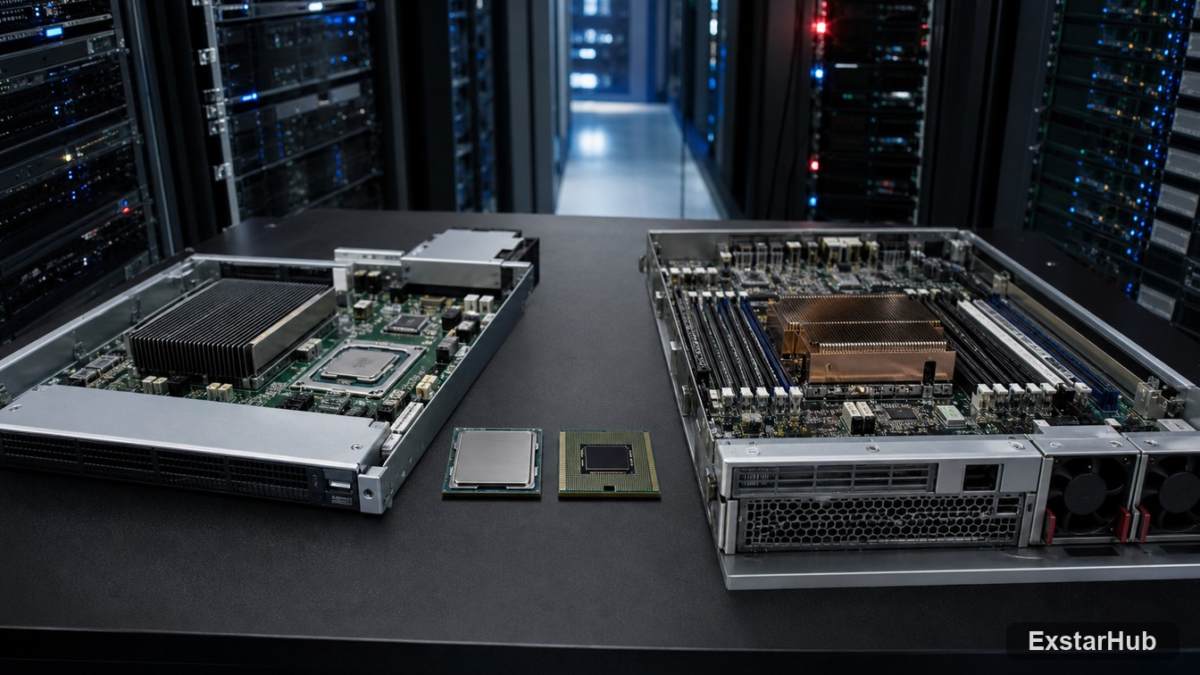
Intel AMD server CPU deals with Chinese customers are moving toward longer purchase commitments as demand for data-center processors tightens, according to a July 23 Reuters report. The agreements are reportedly designed to secure order volumes rather than fix prices, leaving buyers exposed to a market in which some server CPU prices in China have risen more than 40% since the start of 2026.
The report is based on two people familiar with the talks. Intel and AMD did not respond to Reuters requests for comment, so the contract terms and price movements should be treated as reported information rather than company-confirmed announcements.
What the reported agreements cover
Reuters says most of the purchase commitments under discussion cover roughly one year of supply. Intel and AMD have also discussed terms lasting two years or longer with some customers, according to one source.
The key detail is what the agreements do not guarantee. They reportedly commit customers to purchase volumes but do not lock in the price of those processors. That structure gives suppliers more certainty about future demand while buyers secure a place in the supply queue without protection from further price increases.
The report did not identify the Chinese companies involved or specify which Xeon and EPYC products are covered. It also did not establish that Intel and AMD are negotiating jointly; the two rivals are separately seeking longer commitments from customers in the same constrained market.
Server CPU prices are rising with AI demand
One Reuters source said prices for some server CPU products in China have increased by more than 40% since the beginning of the year, with month-over-month increases exceeding 10% for certain parts. Those figures describe selected products in China, not a universal increase across every Intel or AMD server processor worldwide.
Earlier in 2026, Reuters reported lengthy delivery waits for both companies’ server CPUs, including Intel lead times of up to six months for some models. Intel CEO Lip-Bu Tan also told analysts in April that demand continued to exceed supply, particularly for Xeon processors.
The pressure reflects how AI infrastructure is broadening beyond accelerators. GPUs handle much of the model training and high-throughput inference work, but data centers still require CPUs for orchestration, storage, networking, databases and general-purpose workloads. Expansion plans such as Microsoft’s AMD-powered Helios AI racks show how CPUs remain part of a wider system rather than a replaceable background component.
Why Chinese buyers face additional pressure
China is one of the world’s largest server markets, supported by cloud platforms, internet companies, national computing projects and rapid data-center construction. At the same time, U.S. export controls limit access to some advanced AI accelerators, increasing the importance of the compute products that Chinese buyers can still obtain.
A tighter CPU market could raise the total cost of expanding AI services and delay deployments if processors, memory, networking equipment and power infrastructure do not arrive on the same schedule. The problem is similar to the capital-planning pressure examined in our analysis of Meta’s expanding AI data-center costs: securing one class of hardware does not remove bottlenecks elsewhere in the stack.
Long commitments shift risk toward customers
For Intel and AMD, longer volume commitments can improve demand visibility and make production planning easier. They may also strengthen supplier bargaining power while inventory remains constrained.
Customers take on a different risk. A volume commitment without fixed pricing can secure supply, but it can also leave a buyer paying more if the shortage continues or holding excess inventory if demand changes. The value of the agreement therefore depends on the exact cancellation terms, delivery guarantees and product mix, none of which were disclosed in the Reuters report.
The arrangement also resembles changes in the memory market, where AI demand has encouraged buyers to negotiate longer supply commitments. That does not mean the CPU market has reached the same level of scarcity, but it suggests enterprise procurement is moving away from short, predictable ordering cycles.
What remains unconfirmed
Neither Intel nor AMD publicly confirmed the reported customer agreements. The names of the buyers, final contract durations, purchase volumes and covered products remain undisclosed. The more-than-40% price increase also applies only to some products in China, according to a source, and should not be generalized to the companies’ entire portfolios.
Those limits matter because the report describes negotiations and market conditions, not a formal joint announcement. What is clear is the underlying signal: AI investment is placing new pressure on conventional server processors, and suppliers are using that demand to seek longer customer commitments.
Key takeaways
- Reuters reports that Intel and AMD are separately signing longer server-CPU purchase commitments with Chinese customers.
- Most reported agreements cover about one year, while some discussions extend two years or longer.
- The commitments reportedly lock in purchase volumes, not prices.
- Prices for some server CPU products in China have reportedly risen more than 40% since the start of 2026.
- Intel and AMD did not comment, and buyer names and detailed contract terms remain undisclosed.
Source: https://cdn.mos.cms.futurecdn.net/C4FAi2KzwaGLUrBqzX5aBM.png