Geekbench 7 Benchmark Overhauls CPU and GPU Testing
Geekbench 7 updates its CPU and GPU benchmark suites with modern media, machine-learning and game-physics workloads. The new methodology aims to better reflect real software, but its scores should not be compared directly with Geekbench 6.
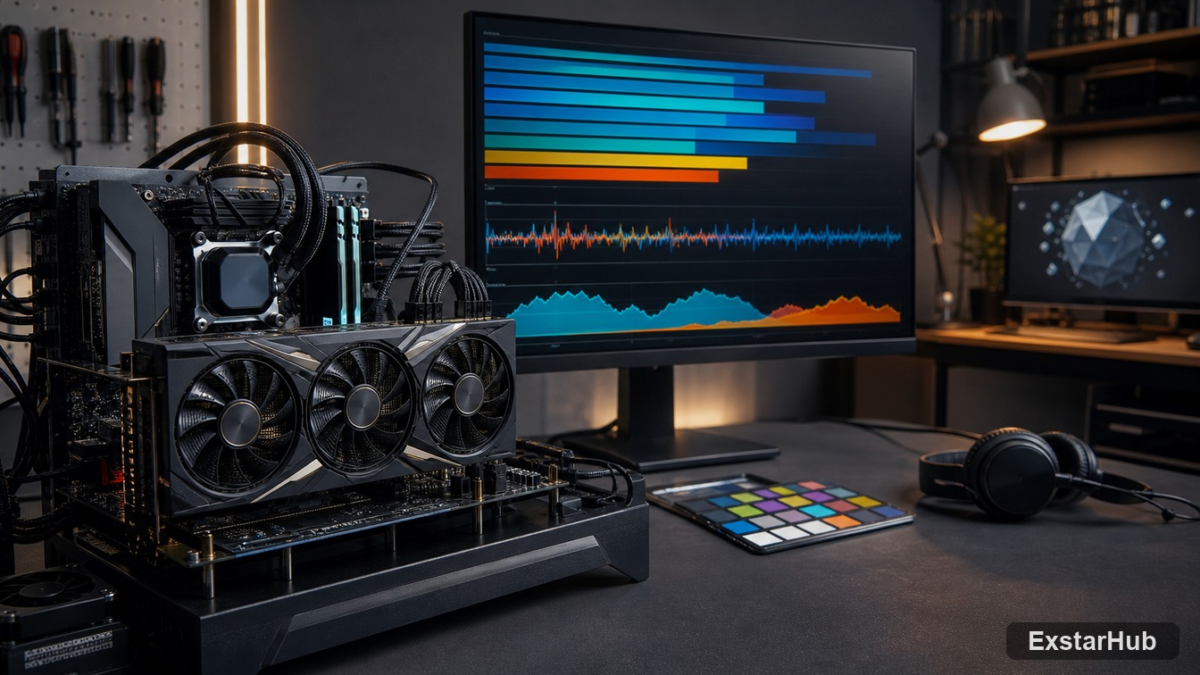
The Geekbench 7 benchmark is now available with a redesigned mix of CPU and GPU workloads intended to better represent current computing. Primate Labs launched the new version on July 23, 2026 for Windows, macOS, Linux, Android and iOS.
The release adds AV1 video encoding, Opus audio compression, live-caption generation, game physics and a broader set of GPU compute tests. It also changes when workloads contribute to the multi-core score, making version 7 more than a routine update to the existing benchmark.
What the Geekbench 7 benchmark changes
Primate Labs says the new CPU suite is built around tasks found in video conferencing, streaming, content creation and gaming. Its media tests encode screen-sharing footage with AV1, compress music and spoken audio with Opus, and decode media while generating captions with the Whisper speech-recognition model.
A new Game Physics workload uses the Jolt Physics engine. The Photo Editor test now includes a wider range of editing operations, while Photo Library can import and process newer formats including JPEG XL and DNG. These workloads are designed to make the benchmark resemble recognizable applications rather than isolated mathematical tests.
That does not mean a single score predicts every program. Real applications differ in code, acceleration support, thermal behavior and memory use. Geekbench remains a compact cross-platform comparison tool, not a substitute for testing the exact software or game a buyer plans to run.
Multi-core scores now follow real software behavior
The most consequential methodology change affects multi-core testing. Geekbench 7 only runs a workload in multi-threaded mode when the real task it models is meaningfully multi-threaded. The HTML5 Browser workload, for example, is omitted from the multi-core suite because browser work is generally single-threaded or lightly threaded.
Previous benchmark designs could make every workload use all available cores even when the modeled application would not. Primate Labs argues that this can exaggerate the value of additional cores. The revised approach should make the multi-core result more representative, but it also means readers need to look beyond the headline number and inspect individual workloads.
This is especially relevant as desktop processors combine different core types and increasingly high core counts. A CPU that performs strongly in rendering or compression may not lead in lightly threaded browser, office or game workloads. Buyers comparing upcoming processors, including chips such as Intel’s Raptor Lake Next lineup, should use version-matched results and workload-level data.
GPU testing expands into machine learning and creation
The GPU benchmark now puts more emphasis on machine learning and content creation. New workloads cover face tracking with real-time effects, machine-learning image upscaling and background blur for video calls. Other additions include RAW image processing, LUT-based video color grading, path tracing and fluid simulation.
CUDA joins OpenCL, Vulkan and Metal as a supported GPU API. That gives Nvidia GPU owners a route to test compute performance through the API used by many professional and accelerated applications. Results obtained through different APIs still require careful interpretation because drivers, implementations and workload support can affect the outcome.
The machine-learning additions are part of Geekbench 7’s GPU suite. They should not be confused with Geekbench AI, Primate Labs’ separate benchmark for evaluating CPU, GPU, NPU and other accelerator performance across dedicated AI models and frameworks.
Larger data sets raise the workload
Primate Labs has also increased the size and variety of the data processed by the benchmark. File Compression now handles a broader collection of source code, object code and text documents. PDF Viewer uses materials ranging from maps to technical documents and academic papers, while developer and imaging tests include more assets and formats.
Larger inputs can expose memory, cache and sustained-performance differences that very small tests miss. They may also make runs take longer or place greater pressure on devices with limited memory. The goal is not simply to make the benchmark heavier, but to keep its inputs closer to the files people use in 2026.
Geekbench 7 scores are a fresh comparison set
Geekbench 7 results should not be placed directly beside Geekbench 6 scores. The workloads, data sets, multi-core rules and scoring reference have changed, so a lower or higher number across versions does not prove that a device gained or lost performance.
Reviewers and buyers should compare Geekbench 7 with Geekbench 7, while retaining older version 6 charts as a separate historical data set. Early results will also be less useful than mature charts until the Geekbench Browser accumulates enough runs across devices, operating systems and power profiles.
Availability and system requirements
Primate Labs says Geekbench 7 is free for personal use. Geekbench 7 Pro is also available for commercial and automated testing, with a 20% launch discount offered through August 6, 2026.
The desktop requirements have moved forward. The official download page lists Windows 11 with 8GB of RAM, macOS 15 with 8GB, and 64-bit Ubuntu 22.04 LTS with 4GB. Mobile support starts at Android 12 with 4GB of RAM and iOS 18. Processor support varies by platform.
Why the overhaul matters
Geekbench is widely used because it produces fast, shareable results across phones, tablets and computers. That reach also makes methodology changes important: a benchmark can influence reviews and buying decisions long before most readers examine how its score is constructed.
Version 7’s stronger focus on real media pipelines, selective multi-threading and modern GPU workloads is a sensible update to what everyday devices now do. Its value will depend on disciplined use. The new scores can help compare hardware within the same benchmark version, but they should remain one part of a broader performance picture that includes application tests, gaming results, power use and sustained thermals.
Source: https://cdn.mos.cms.futurecdn.net/NDK3ae3zDxAx2BJnMXxBJV.jpg